Clinic, legal, interior, and B2B pages need different tones and screen density.
SEARCH-READY WEBSITE STUDIO
A pretty page is not enough. Customers need a reason to inquire.
We structure pages so search engines, AI, and visitors understand what you offer and why they should inquire.
DECISION SCREEN
The reason to trust you has to show on the first screen
Visitors judge quality, scope, price standards, search readiness, and the next action before they admire design.
Brand Site
“Will the final work be good?”
Work quality and standards must be visible at first glance.
“Why this estimate?”
Scope, revisions, and exclusions reduce price anxiety.
“Do they know our buyers?”
Each industry needs different questions and proof.
“Can search engines read it?”
Titles, FAQ, schema, and meta are organized from the start.
The decision flow continues below the fold
Attention comes first; proof, scope, FAQ, and CTA complete the decision.
First ScreenWorkScopeFAQContact
Questions become page devices
Hesitation becomes proof, scope copy, search structure, and CTA.
ProofScopeSEO/AEO/GEOConversion Copy
Sample Review Criteria
Review samples by visual tone, purchase logic, and inquiry flow
Internal sample builds only. Compare each industry’s screen tone, buyer checks, and next action.
We place price, scope, risk, and process information before the inquiry step.
Buttons, forms, and prep materials lead into the next action.
We check whether the first screen, cards, and CTAs stay readable on small screens.
PORTFOLIO
Sample Portfolio
Internal sample builds, not real client work. Compare industry tone, purchase logic, and inquiry flow.
Swipe sideways to compare featured samples.
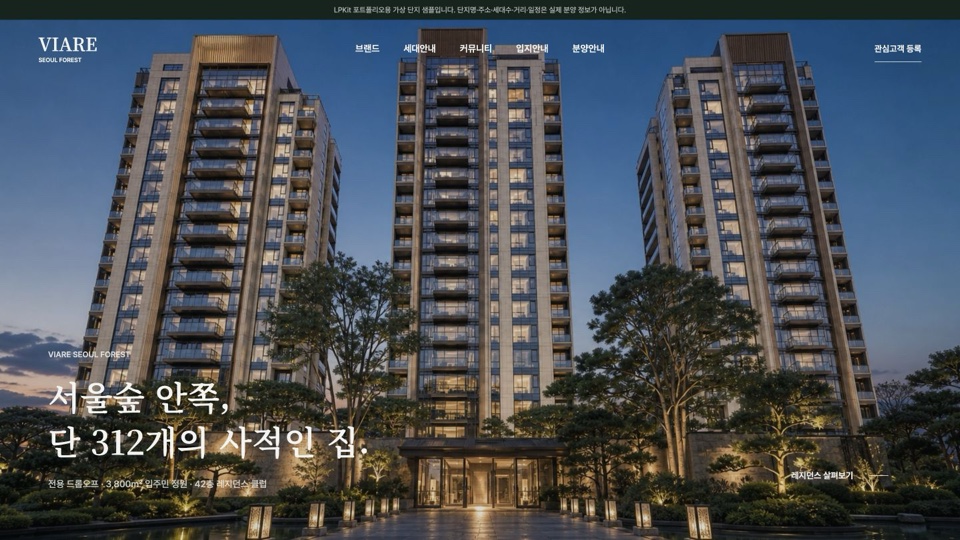
REAL ESTATE · PRIVATE RESIDENCE
VIARE Seoul Forest
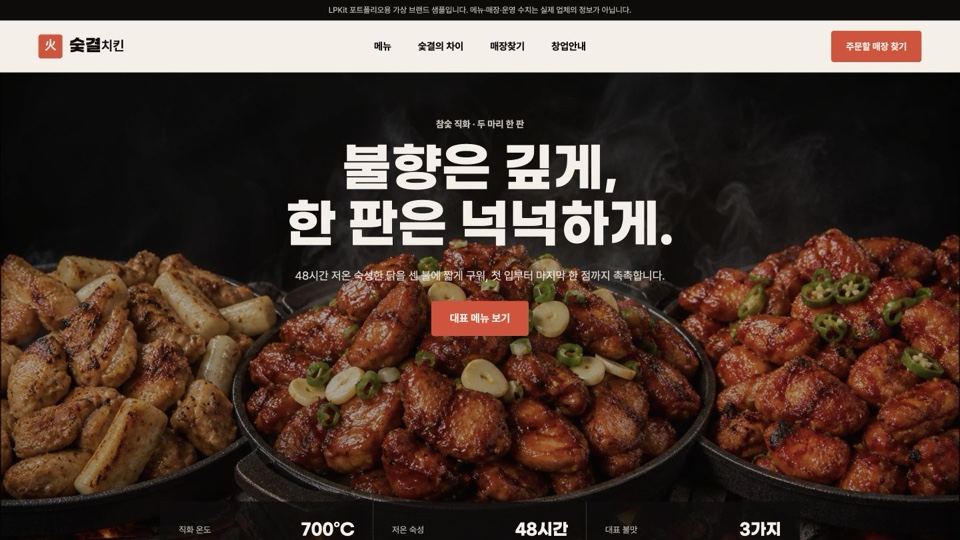
FOOD BRAND · CHARCOAL
Sutgyeol Chicken
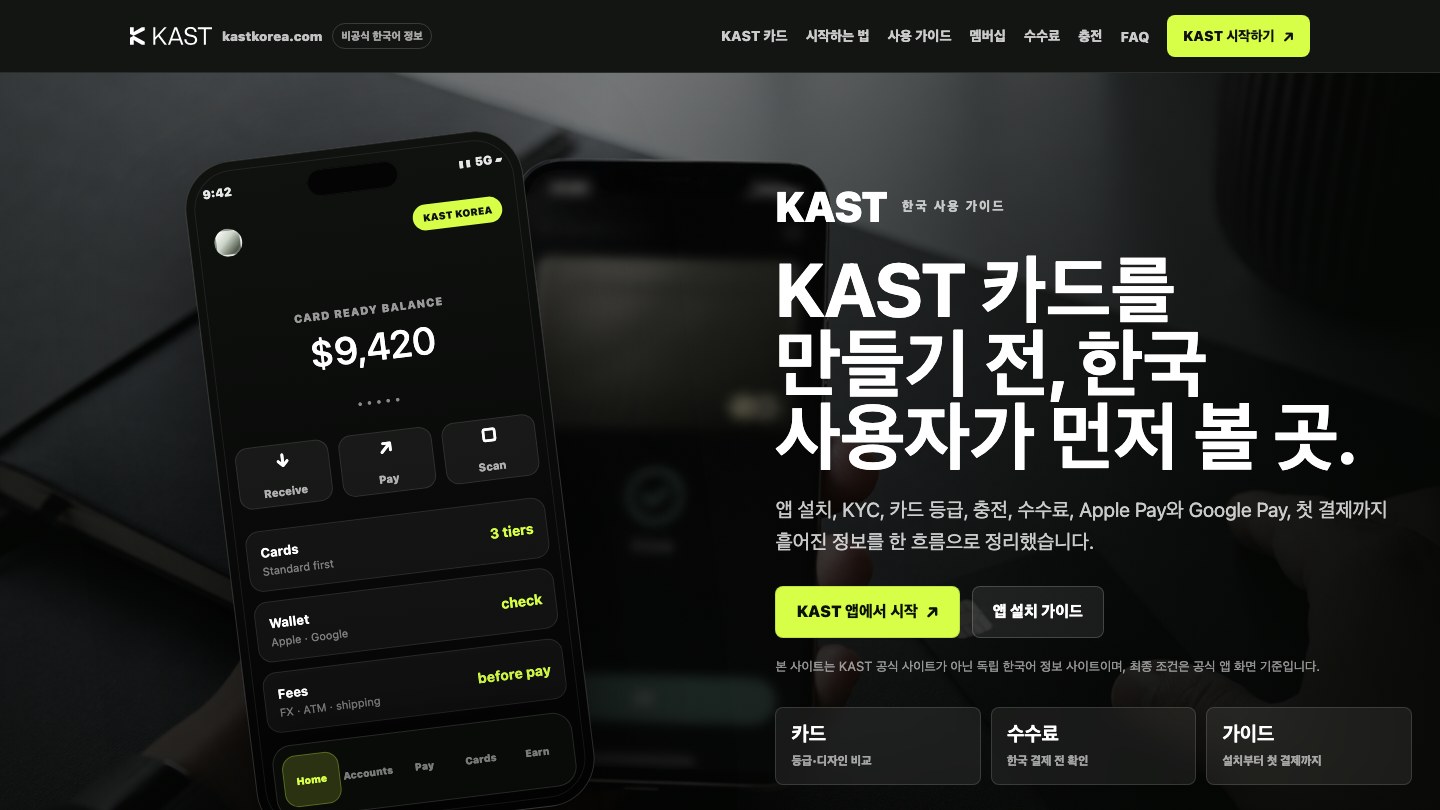
FINTECH · SAMPLE
KAST Korea
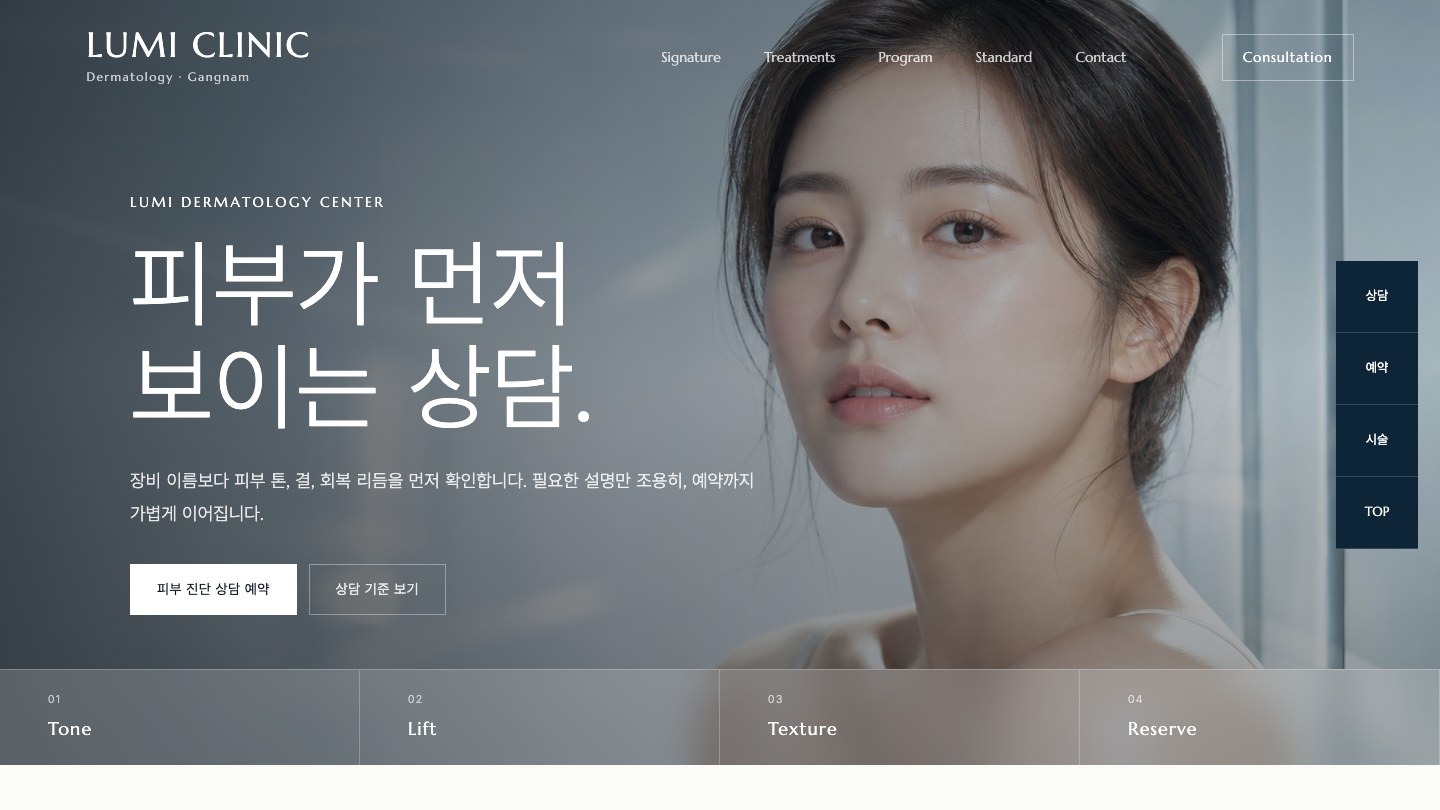
CLINIC · CONSULTATION
LUMI Clinic
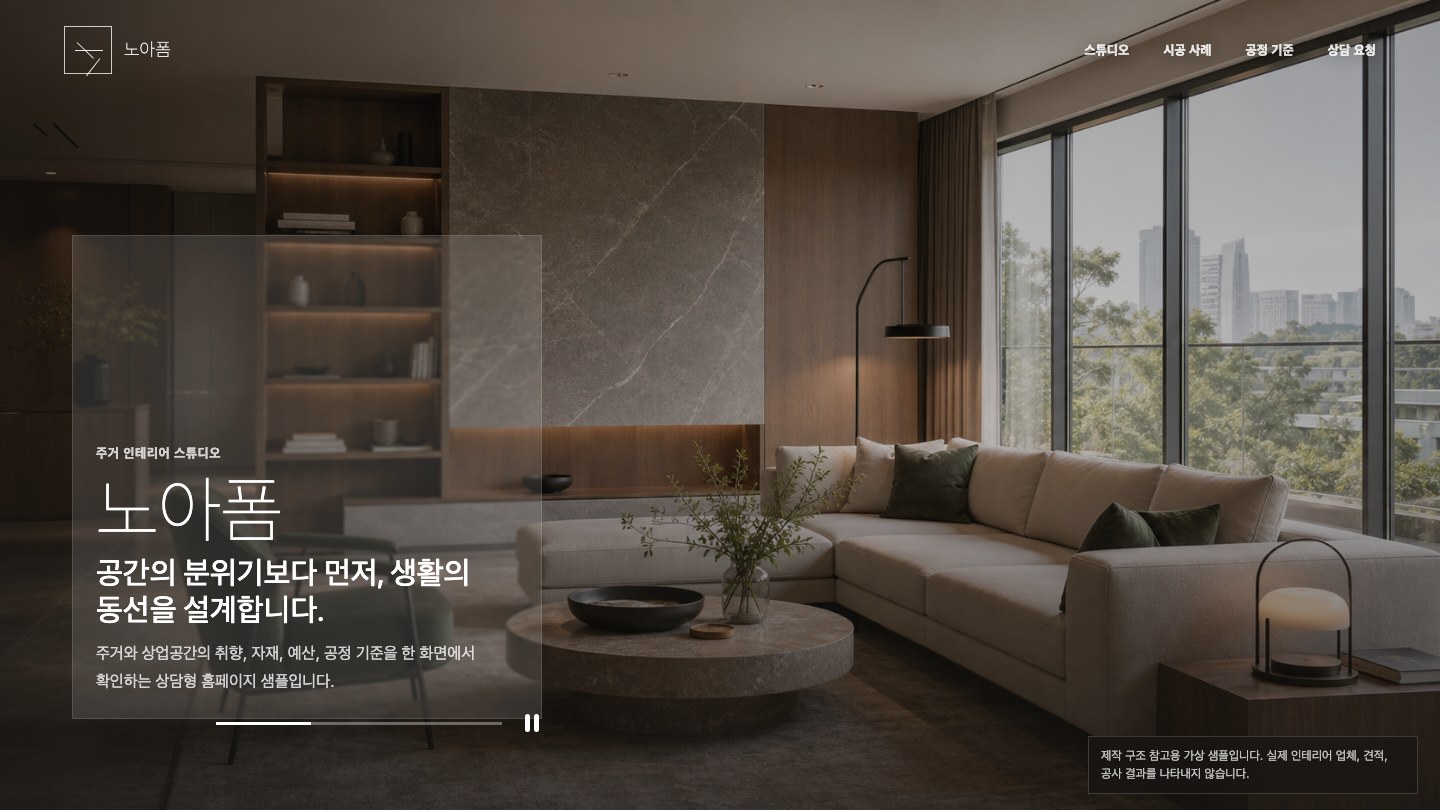
INTERIOR · SHOWROOM
NOA FORM
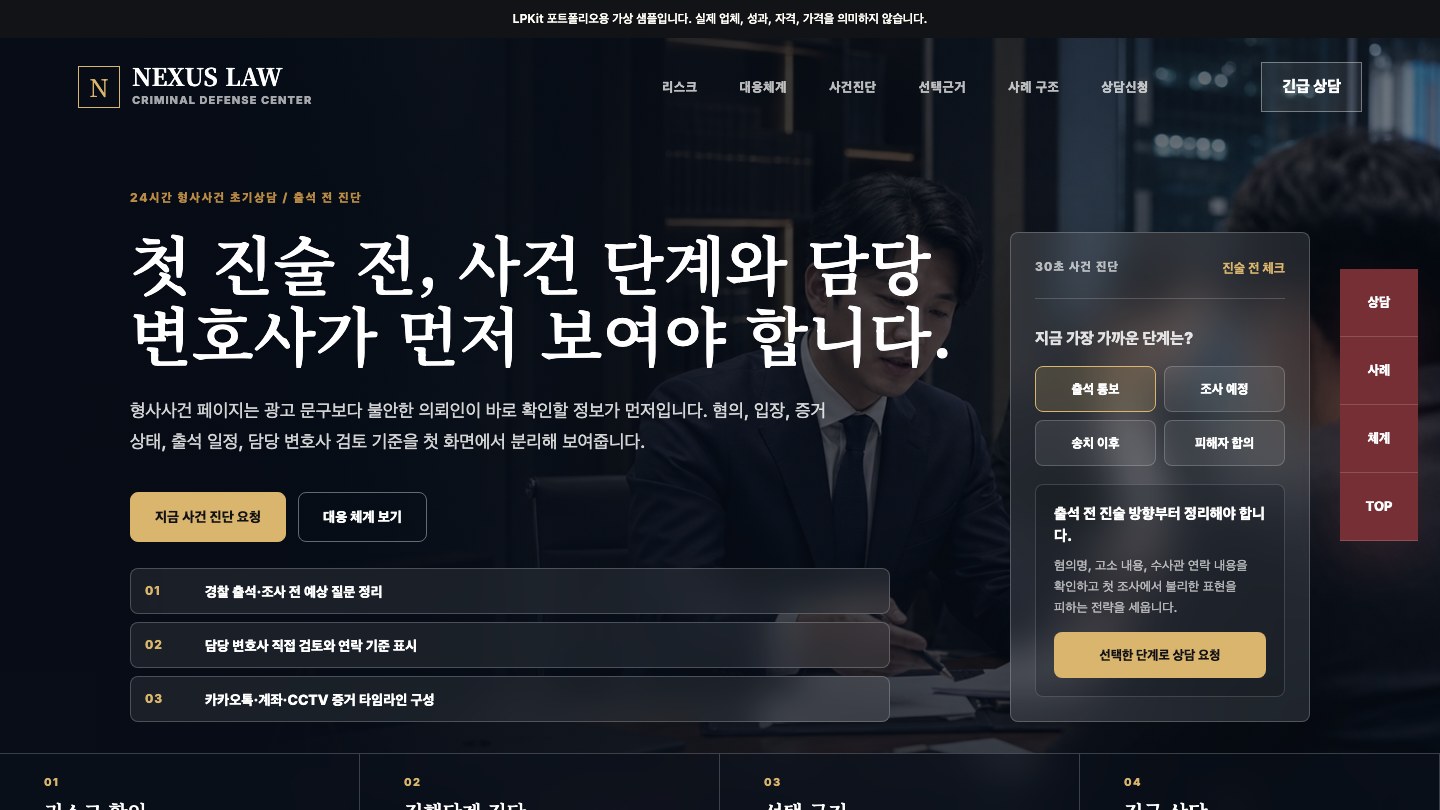
LAW · HIGH TRUST
NEXUS LAW
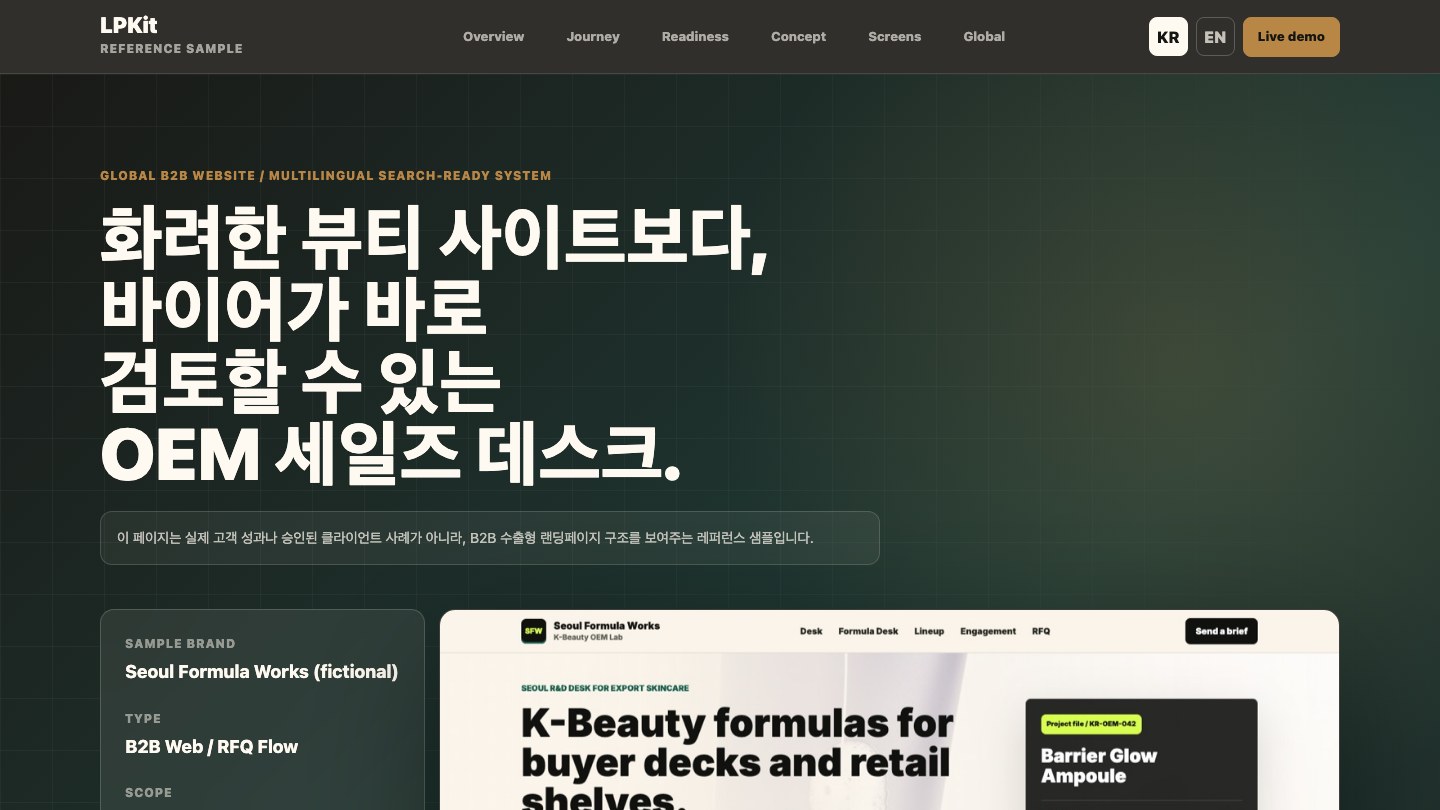
B2B · EXPORT
K-Beauty OEM
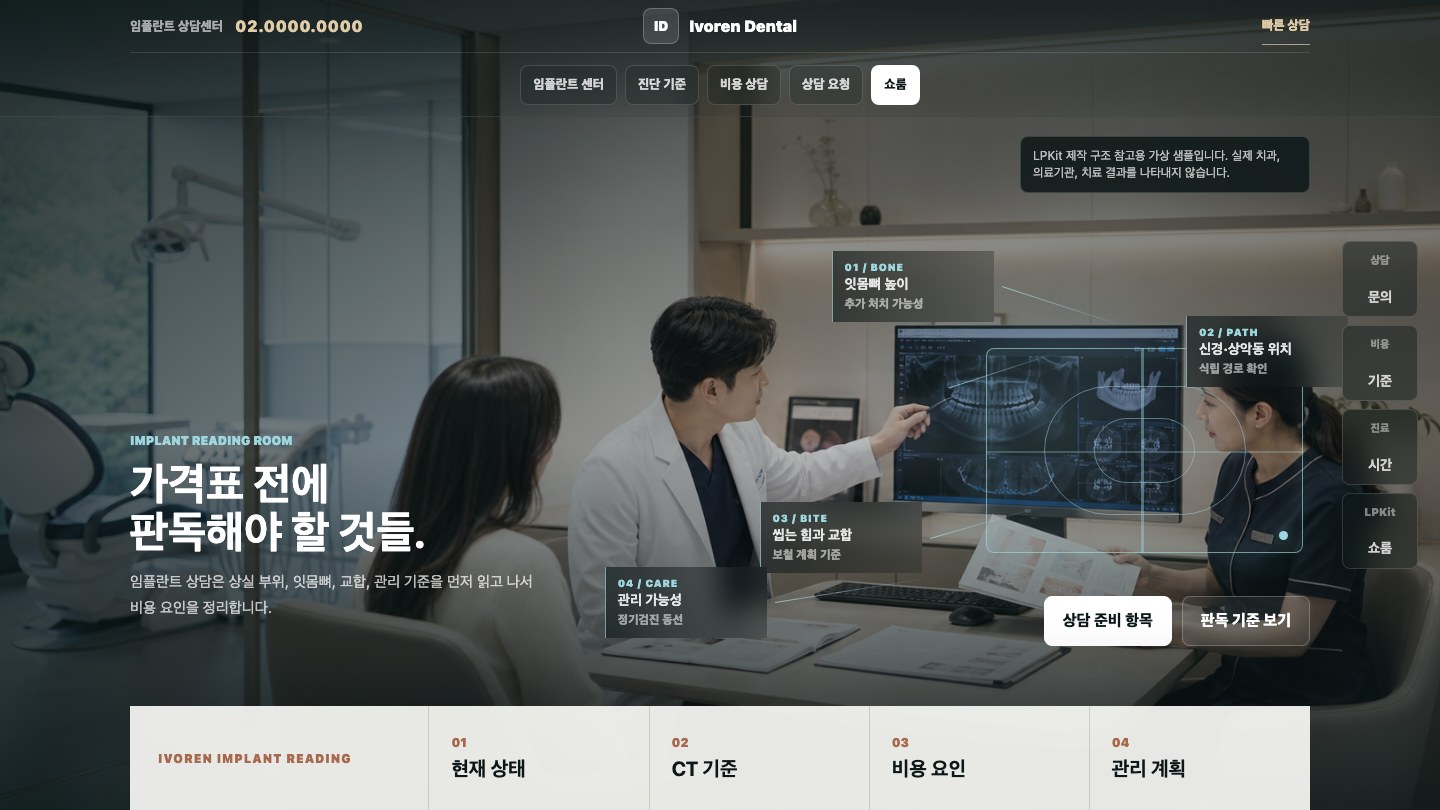
DENTAL · IMPLANT
Implant Clinic
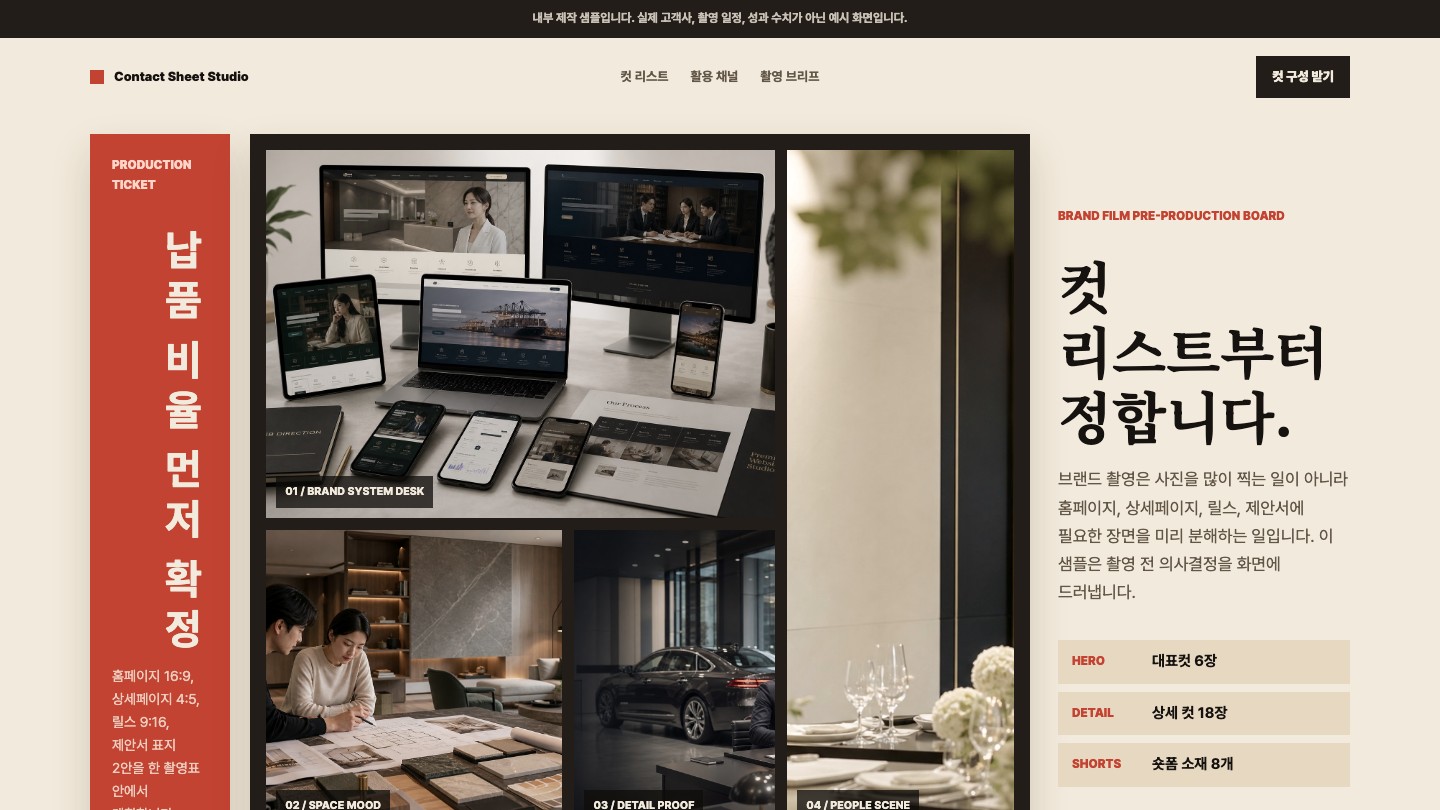
BRAND FILM · SERVICE
Contact Sheet Studio
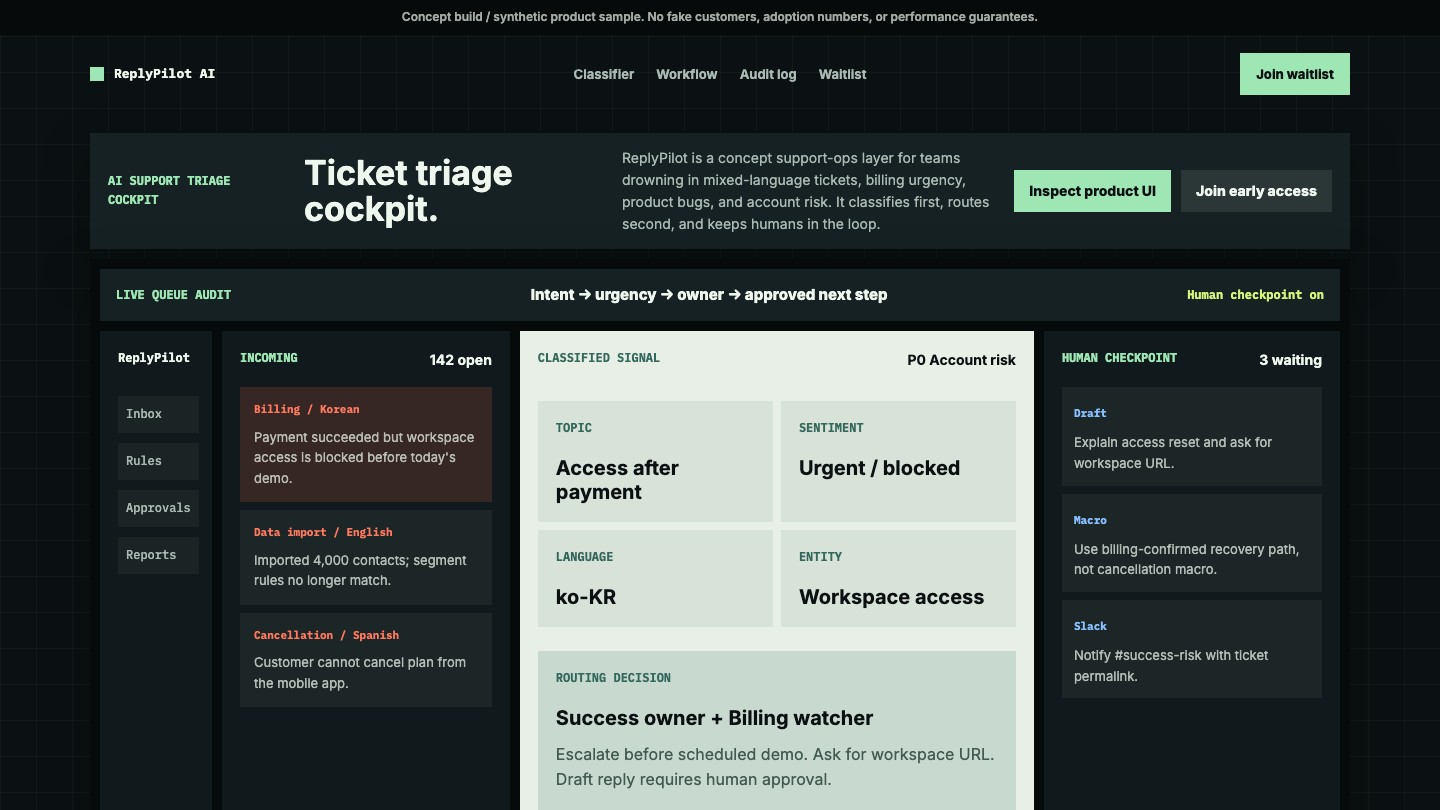
GLOBAL SAAS · AI
ReplyPilot AI
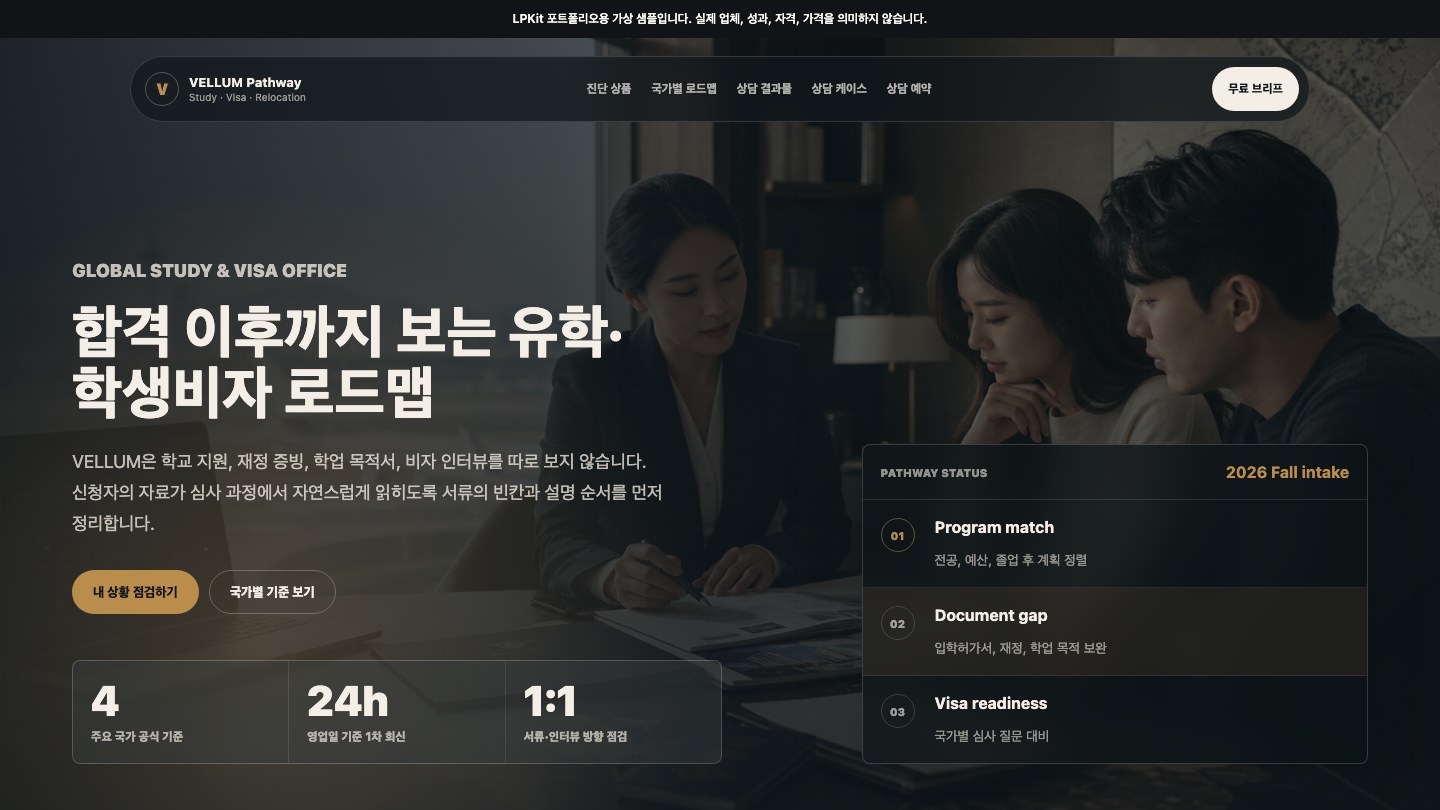
STUDY VISA · PATHWAY
Global Pathway
PROJECT PATHS
Different projects ask different questions
New sites, redesigns, ad pages, and search-ready websites need different proof orders. LPKit sets that order first.
01
New Brand Site
Even with few materials, we clarify the audience, service, and reason to inquire first.
First Build
Lead with the reason to trust you
The first screen shows who you serve, what you do, and why inquiry makes sense.
Audience
Service Scope
Inquiry Reason
Review Criteria
What first-time visitors need to see
- Is the audience clear on the first screen?
- Are scope and cost criteria easy to see?
- Are materials and next actions clear?
Home Structure
Proof Block
Basic SEO
Inquiry CTA
02
Website Redesign
Before changing visuals, we find mobile CTA friction and missing answers.
Find drop-off points before redesign
We inspect mobile CTA, missing answers, and proof gaps before changing visuals.
CTA
Can visitors tap immediately on mobile?
Answers
Does the page answer questions before inquiry?
Proof
Is there proof that reduces price anxiety?
Mobile CTA
FAQ Upgrade
Trust Proof
Review Criteria
Drop-off points to inspect first
- Can we see where visitors leave?
- Are mobile buttons and forms visible?
- Is there enough proof to compare?
Screen Rebuild
FAQ Upgrade
OG/Meta
Mobile QA
03
Ad landing page
After an ad click, time is short. We connect the first sentence, price anxiety, and form reason.
Paid Traffic
After the click, the first sentence sells
Ad copy, first screen, price concerns, and form reason stay in one path.
Ad Copy
Price Proof
Inquiry Reason
Review Criteria
Proof needed within seconds
- Does the ad message continue immediately?
- Are price, timeline, and proof visible?
- Is the form still worth filling?
Conversion Copy
Repeat CTA
Form Optimization
Mobile QA
04
Search-Ready Website
For search and AI, the page must read like a document, not only a pretty screen.
Search Ready
Connect questions, FAQ, and schema
Question sections, FAQ, schema, and brand context become one readable structure.
Question Sections
FAQ Structure
Brand Context
Review Criteria
Structure search and AI can read
- Are search questions in headings and FAQ?
- Are title, sitemap, canonical, and schema ready?
- Are context sentences clear for AI?
SEO Meta
AEO FAQ
GEO Context
Launch QA
Scope
Confirm scope, revisions, exclusions
Copy
Write first sentence through CTA
Search
Align search standards and schema
Mobile
Check buttons and forms on mobile
Launch
Check links, OG, and canonical
BUYER HESITATION
Inquiries stop where questions remain unanswered
Before contact
Visitors check output quality, cost logic, industry fit, and mobile flow.
LPKit turns those questions into proof blocks and CTA paths.
“Will the final work actually be good?”
Weak standards remove you from the shortlist.
Show proof early“Will the price increase after the estimate?”
Scope, revisions, and QA must appear before inquiry.
Disclose scope before inquiry“What if it looks good but does nothing for search?”
If title, heading, FAQ, and schema are missing, search and AI have little to read. We include the structure in scope.
Include SEO/AEO/GEO in scope“Do they understand my buyers?”
Different buyers trust different proof. We map questions first, then set the sequence.
Map the decision order first“Will inquiry really be easy on mobile?”
Most visitors compare on mobile. If buttons, forms, or sentence length get in the way, inquiries stop.
QA mobile CTA and forms“Will I know what went wrong after launch?”
A finished screen is not enough. Links, OG, meta, privacy copy, and CTA behavior are checked before launch.
Provide a launch QA checklistSEARCH READY STRUCTURE
Build signals search and AI can read
Tags alone are not enough. Questions, answers, proof, and CTA flow must follow the same order from the start.
SEO / DISCOVERY
Help search engines read the page topic
We align title, meta description, canonical, sitemap, semantic headings, and schema in one structure.
Search Intent
Start by aligning how customers search
Page Structure
H1-H3, canonical, and schema standards
Discovery Readiness
Design interpretable structure, not ranking promises
Intent
Choose search phrases first
Use real questions, not only service names
Structure
Make the page read like a document
H1-H3, FAQ, and schema point in the same direction
Launch
Check discovery before launch
Check sitemap, OG, and internal links together
Meta
Meta copy aligned to page purpose
Heading
Search intent and purchase sequence
Index
Sitemap, links, and OG checks
AEO / ANSWER
Answer customer questions before inquiry
Price, scope, timeline, materials, and risks become FAQ blocks before visitors contact you.
Purchase Questions
Answer before visitors ask
FAQ Flow
Structure answers in short, clear sentences
Consultation Conversion
Connect to CTA naturally after reducing anxiety
Question
Extract hesitation questions first
Price, scope, timeline, and materials stay visible
Answer
Reduce anxiety with short answer blocks
Write sentences visitors can judge immediately
Action
Connect answers to inquiry
Keep the path from FAQ to CTA unbroken
FAQ
Answer price and revision questions
Proof
Place criteria before inquiry
CTA
Connect answer to inquiry
GEO / CONTEXT
Make brand context clear for AI search
Service, location, expertise, and proof become consistent signals search and AI can interpret.
Brand Context
Clarify who you serve and what you do
Proof Statements
Separate explanations and criteria needed for answers
Consistency
Align expertise, scope, and proof language consistently
Entity
Connect brand and service into one context
Clarify who you serve and what you provide
Context
Leave proof that AI will not confuse
Keep location, expertise, and scope language consistent
Signal
Prepare signals that can be cited in search answers
Build sentences that explain by question criteria
Entity
Brand, service, audience clarified
Context
Expertise and proof aligned
Snapshot
Check answer readiness by question criteria
BEFORE / AFTER
Same site, different structure
The decision flow changes, not just the design.
BEFORE
A good-looking page with no criteria
Images and copy may exist, but the reasons to decide remain unclear.
- CopySounds fine, but no trust criteria
- ScopeScope and revision rules stay hidden
- SearchAnswers never become structure
- Scope Hidden
- Weak Answer Structure
- Weak CTA
AFTER
A page with criteria visible before inquiry
Price, scope, revisions, and FAQ are tied into one flow that leads to consultation.
- First ScreenAudience, scope, inquiry reason visible
- CriteriaScope and revisions disclosed
- SearchFAQ, heading, schema, CTA connected
- Criteria Published
- FAQ Structure
- Inquiry CTA
Contact
Only a form is placed Decision proof is placed firstSearch
Image-heavy layout Answers remain as search structureScope
Revision scope unclear Build scope defined in advanceSCOPE & PRICE
We show what changes cost before the estimate
We prepare a tailored quote after reviewing your industry, page count, materials, and integrations.
Basic Landing Page
Basic Landing Page
Custom quoteWhen materials are ready, we organize the first screen, key sections, responsive layout, and basic CTA.
- First screen and key section structure
- Desktop and mobile responsive build
- Basic title, description, and OG setup
- Inquiry CTA and basic form connection
3-5 days
Single service
Basic QA
Search Ready Landing Page
Conversion Landing Page
Custom quoteFor one service or campaign, we connect conversion copy, FAQ, SEO basics, and mobile CTA.
- Landing page for one core service
- Structure from first screen to CTA
- Conversion copy, FAQ, and SEO meta writing
- Schema, OG, canonical, and mobile QA included
7-10 days
One core service
Two revision rounds
Search Ready Page
Search-Ready Landing Page
Custom quoteWe add FAQ, schema, OG, and launch QA for search and AI.
- Search intent and answer-style FAQ design
- Core proof and inquiry flow for the service
- FAQPage, Service, and Organization schema standards
- Sitemap, OG, mobile and link QA included
7-10 days
FAQ/schema
Launch QA
Included by Default
We deliver structure and copy that help customers reach inquiry.
- Structure design, conversion copy, responsive implementation
- SEO meta, FAQ/schema, OG, canonical
- Mobile CTA, links, forms, launch checklist
Quoted Separately
Scope-expanding items are separated before contract.
- Photography, logo/branding, professional translation
- Ad operation, CRM, booking, and payment integrations
- Medical/legal ad review and additional pages
Revision Standard
Draft, revision, and added-scope rules are agreed first.
- Two revision rounds after first draft included
- Additional pages or features require approval before work begins
- Typical build timeline is 7-10 days; websites are scoped separately
WHAT YOU GET
Know what you receive before you commit
Inquiry details are reviewed by screen count, copy scope, search structure, and QA. When standards are separated first, cost and revision scope stay stable.
Define the decision sequence from first screen to inquiry.
Write answers to customer questions, not just pretty sentences.
Make the same CTA flow work on desktop and mobile.
Reflect basic SEO, AEO, and GEO structure inside the page.
Check meta, links, forms, OG, and mobile CTA before launch.
Core Deliverables
- Page structure design (first screen to CTA)
- Copywriting for headlines, sections, buttons
- Responsive build (desktop, tablet, mobile)
- SEO setup (title, meta, heading, canonical)
- FAQ / AEO structure design
- Schema JSON-LD setup (FAQPage, Service)
- OG setup for KakaoTalk and social preview
- Inquiry CTA flow design
- Mobile QA (buttons, forms, readability)
- Pre-launch checklist provided
Launch QA
10 / 10
Pre-Launch QA Standard
- Title tag completed
- Meta description completed
- H1/H2 structure organized
- FAQ section built
- Schema JSON-LD applied
- OG image and copy set
- Mobile CTA checked
- Inquiry form tested
- Privacy consent copy checked
- 404, link, and button behavior checked
After this standard is checked, only the inquiry form below remains.
Before estimating, we organize your current state, required screens, and inquiry conversion flow.
Fill Out the Inquiry Form
FAQ
Answer the questions that block inquiry first
Does LPKit guarantee top search rankings?
No. Instead, we build the basic structure that helps search engines and AI understand the page more clearly, including title, meta, heading, canonical, sitemap, FAQ, and schema.
Can we start even if our materials are not organized?
Yes. We first organize your industry, customer questions, competitors, and inquiry goals, then define the required materials, page order, and build scope.
How much does production cost?
Pricing is provided after consultation. We confirm your pages, available materials, copywriting needs, and integrations before preparing a tailored quote.
How do revisions work?
Two revision rounds after the first draft are included by default. Added pages, integrations, photography, translation, and review-related work are approved separately before work begins.
What is included in SEO, AEO, and GEO?
We include SEO meta and heading structure, AEO FAQ and answer blocks, GEO-oriented service, location, and expertise context, plus schema JSON-LD, OG, canonical, and sitemap standards.
Can LPKit build pages for medical, legal, or tax industries?
Yes, but we do not replace professional judgment or guarantee outcomes. For regulated industries, we use conservative wording and inquiry flow that account for ad review, legal expression, privacy, and official notice standards.
How is LPKit different from typical landing page agencies?
LPKit does not only deliver screens. We connect customer questions, price and scope criteria, FAQ, schema, mobile CTA, and launch QA into one inquiry conversion structure.
What do I receive from the pre-build path diagnosis?
Based on your industry, current URL, inquiry goal, competitors, and proof points, we share a possible build path, expected scope, and materials to prepare within one business day.
Are Google and Naver indexing basics included?
The base scope includes title, meta description, heading, canonical, sitemap, OG, and FAQ/schema standards. Actual indexing and rankings are not guaranteed.
Are the portfolio samples real client work?
The current portfolio includes internal sample builds. They demonstrate industry-specific visual tone, purchase criteria, and inquiry flow.
What happens after launch?
Two revision rounds after the first draft are included by default. Post-launch operation, maintenance, ads, and CRM integrations are quoted separately.
GUIDE PAGES
Guides for pricing, process, and comparison
Topics with clear search intent are separated into guide pages: pricing, production, agency comparison, process, and search readiness.
Price
Landing Page Pricing
Review the scope and request a tailored quote.
View Pricing Criteria → Production Landing Page Production GuideSee the order for first screen, copy, SEO basics, and mobile QA.
View Production Method → Comparison Landing Page Agency ComparisonCompare scope, revision, and search standards before judging portfolios.
View Comparison Criteria → Process Landing Page Production ProcessView the flow from inquiry form to launch QA.
View Process → Search Ready Search-Ready WebsiteOrganize search structure and internal links for multi-page projects.
View Website Standards → AI Visibility AI Search Baseline DiagnosisCheck how search engines and AI answer systems read your brand.
View Diagnosis Criteria →GET STARTED
Do you already have materials?
Either way, we can start. The method is simply different.
I have materials ready
Check Expected Scope →
You have copy, photos, or references
If service info or references are ready, scope and cost can be defined faster.
- Service Info
- Photos / Logo
- Reference Sites
Nothing is organized yet
Start With Questions →
You are not sure what to include
We start with customer questions, then organize page order and materials.
- No Materials
- No Cost Sense
- No Order Yet
Build scope, revision standards, and pre-launch QA items are checked before contract.
Payment, mid-project changes, and cancellation standards are clarified in advance.
We confirm not only the finished screen but also files and settings needed for operation.
START WITH STRUCTURE
Diagnose the build path first
Send your industry, URL, inquiry goal, and proof points. Within one business day, we share a possible build path and expected scope.
- Industry / Service
- Current URL
- Inquiry Goal
- 2-3 Competitors
- Trust Proof
One business day reply
Price range shared in advance
Structure diagnosis, not ranking promises